
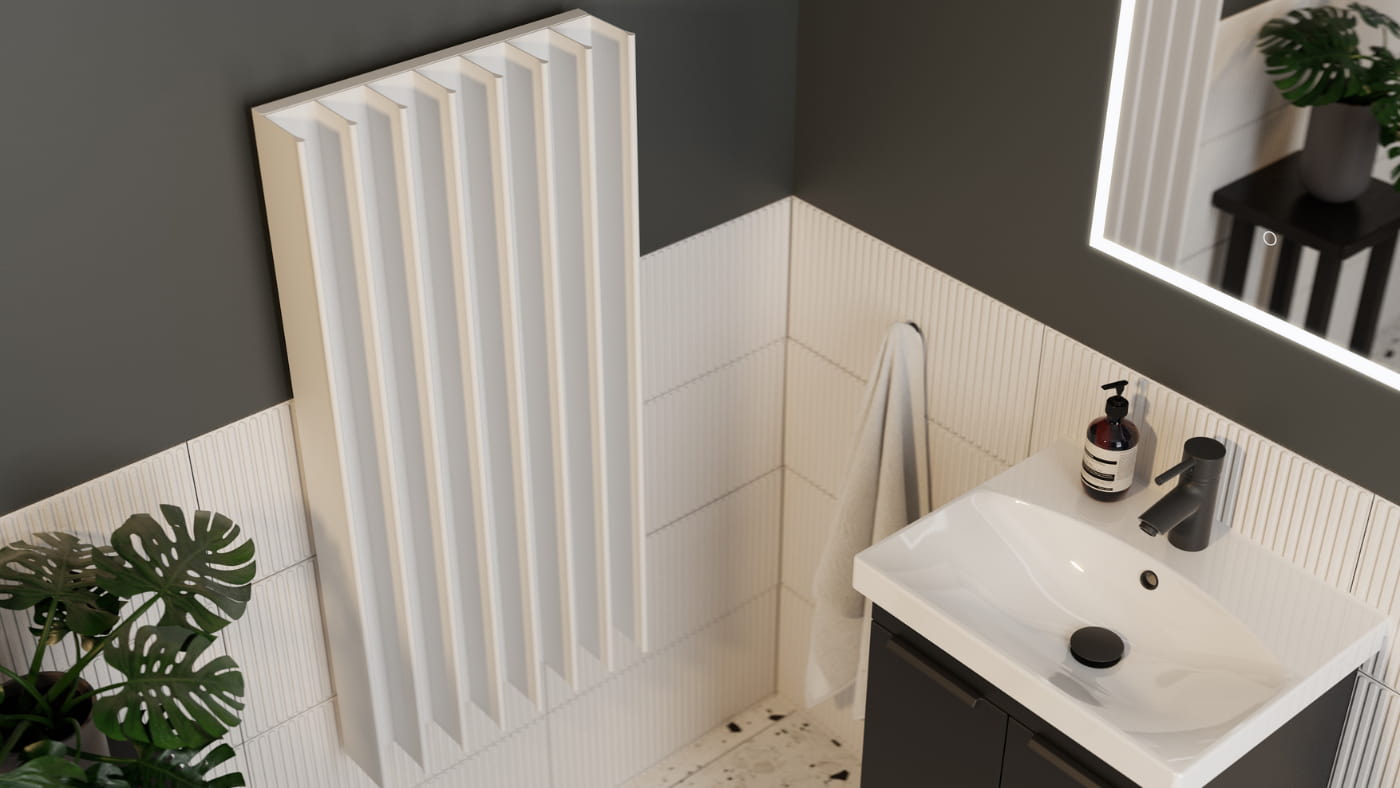
A few years ago heated towel rails were an emerging appliance. Now in 2026, there are so many makes, materials and mounting styles on the market, and choosing the right heated towel rail is harder than it looks. This guide covers the 7 things that really matter when buying a towel warmer so you can be sure you're getting the right one for your home and budget.
1. Heat type: electric vs hydronic
The first decision is also the most important: heat type. There are two ways a heated towel rail generates heat and they are fundamentally different products, so it pays to get this one right.
Hydronic heated towel rails, your first option, run off your home’s hot water system and uses liquid to heat and dry towels. They are common in the UK and Europe where central heating is standard. The upside is they are powerful and run warm as long as your central heating is on. The downside is you have less independent control over them, installation costs are higher, they need more maintenance, and the risk of leaks and water damage is greater.
Electric rails, on the other hand, are liquid-free and run off your electricity supply. They heat and dry towels via heating an internal heat mat or coil. They are self-contained (see point 2 on why self-containment matters), and either plug directly into a power point or hardwire into your bathroom circuit. Installation is more straightforward and far cheaper. Because they run independently from your hot water system, you decide exactly when they come on and go off, and pairing one with a timer means you only pay for the hours you actually need.
The verdict: Australia rarely sees temperatures or building setups that justify a hydronic system. For most Aussie homes, electric does the job perfectly, and is the simpler and more cost-effective choice.
2. Self-containment and repairability
This is the factor most people overlook because it requires thinking ahead. A good towel rail needs to be both self-contained and repairable. One without the other still leaves you exposed when something goes wrong.
Self-containment: Hydronic rails, as mentioned in point 1, are part of your home’s plumbing, which means they are not self-contained. If something goes wrong, the fix often involves a plumber, opening up walls, or replacing the whole unit along with its connections. That is costly and wasteful. Most electric rails, on the other hand, are self-contained. If one fails, you can remove the unit without damaging the rest of your bathroom, a big win for your future self.
Repairability: Repairability is important because even if a unit is self-contained, it does not automatically mean it is repairable. Many budget models are fully sealed units, so a single failed part fails, you'll need to buy a brand new unit and throw the old one into landfill. A well-designed rail should offer replacement parts, letting you swap out and replace individual components rather than the whole thing.
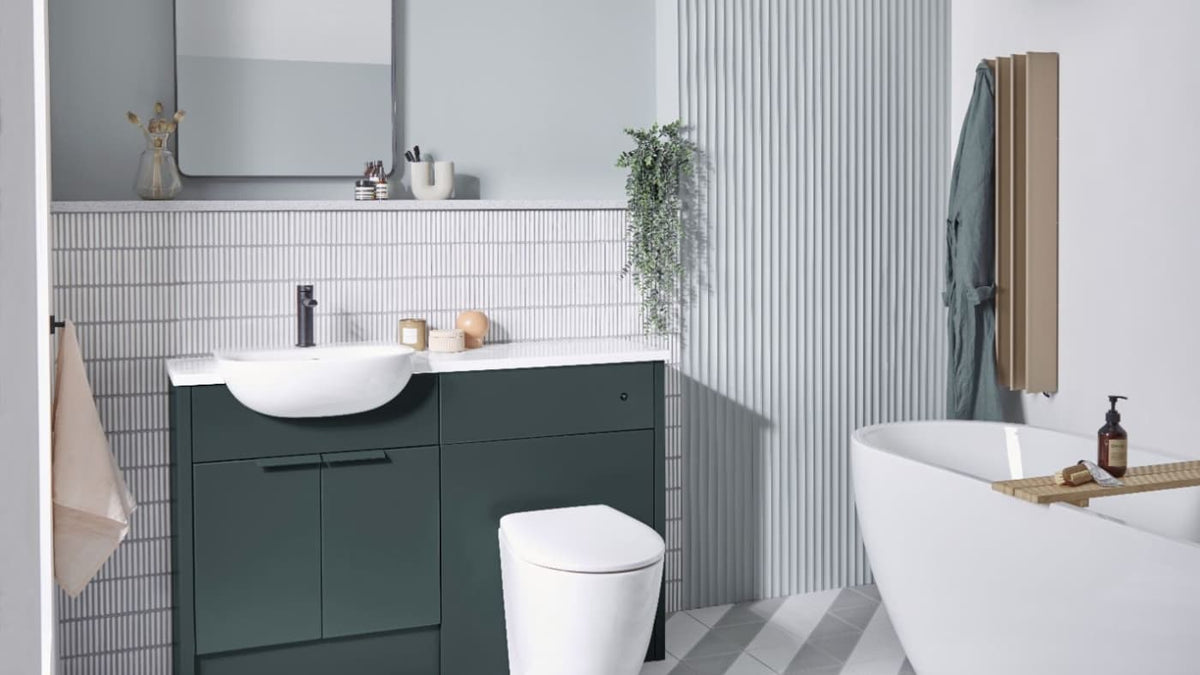
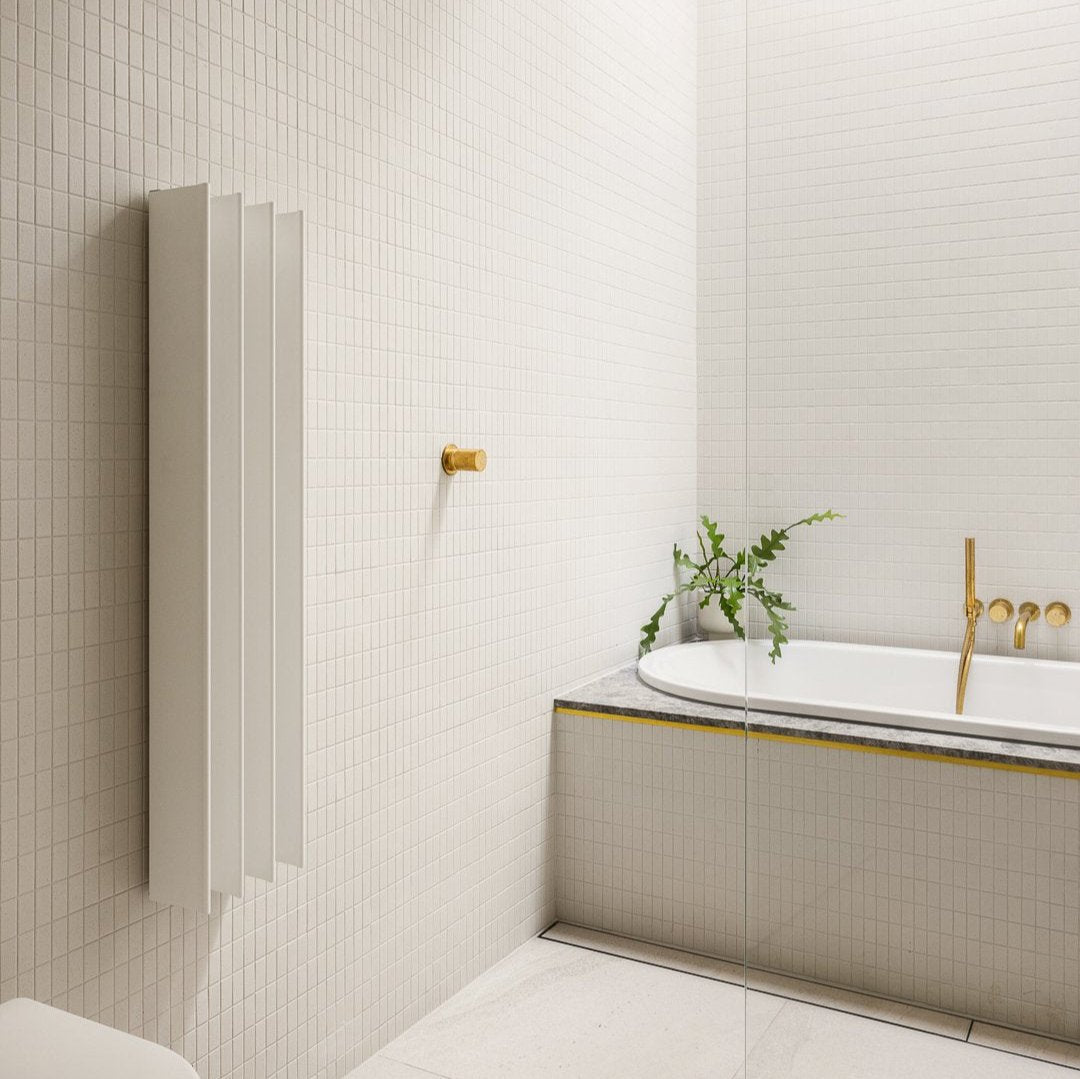
The Eko Heat Gordon is a good example. Its internal heat mat and wall brackets can be bought separately and swapped out easily, at a fraction of the cost of a new rail. That keeps the rail on your wall for longer, saves you money, and means less waste going to landfill.
The verdict: Look for both. A self-contained rail protects your bathroom if something fails, and replaceable parts protect your investment. A rail that ticks both boxes is a rail you only have to buy once.
3. Construction
Most heated towel rails rails are either stainless steel or aluminium. Stainless steel is typically your budget option. The upside of stainless steel is it is durable and cheaper to purchase upfront. The downside however, is in the function. Stainless steel is not a good conductor of heat, resulting in longer warmup times and uneven heat distribution across the rail.
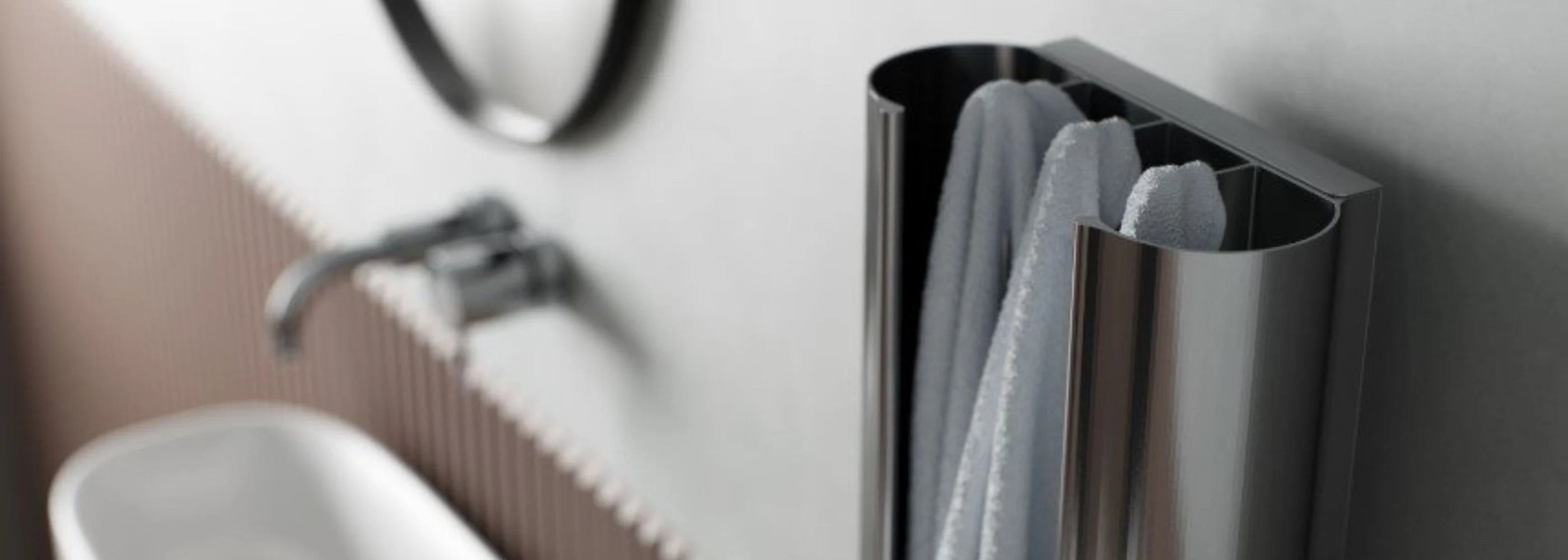
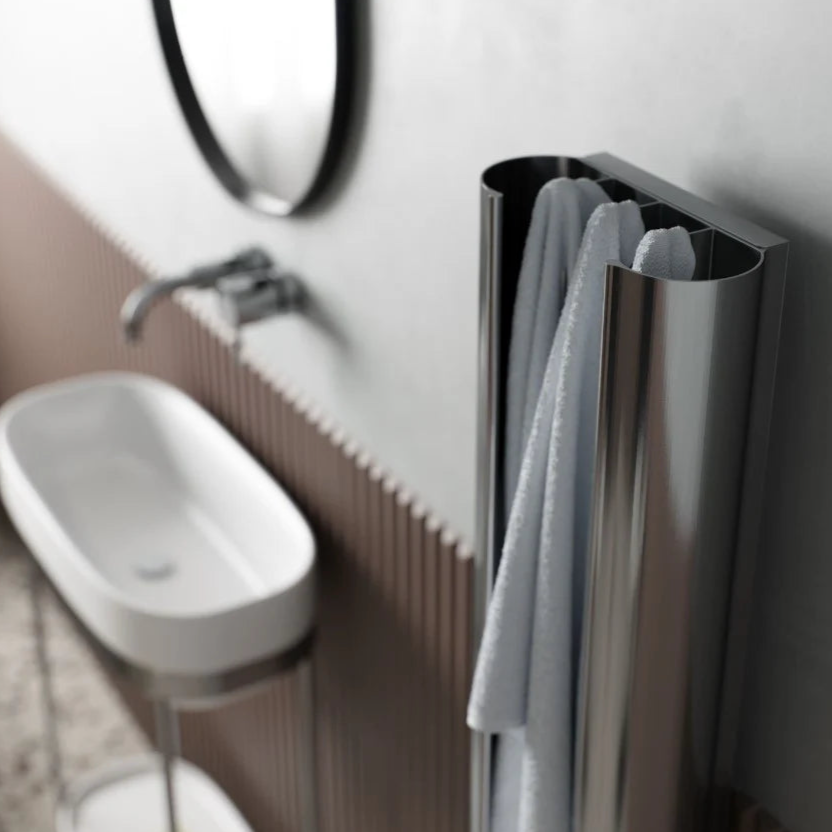
Aluminium on the other hand will be your typical premium option. It conducts heat roughly four times more efficiently than stainless steel. It reaches operating temperature faster, heats more evenly, and uses less energy to do the same job. Aluminium rails can also be powder coated and finished with non-slip coating so towels stay where you put them, something stainless steel cannot offer. The downside? Aluminium rails are expensive, so they'll eat more into your bathroom reno budget.
The verdict: For most households running a rail daily, aluminium is the better long-term investment. Stainless steel is fine for occasional use or where upfront cost is the primary concern, but if drying speed and daily energy efficiency matter to you, aluminium wins.
4. Style: Vertical vs Horizontal
Horizontal ladder rails are a traditional option and still widely available. They take up more area space on the wall, however they tend to stick out less as the towels are folded over rather than hung. The main problem with horizontal towel rails is when towels are draped over horizontal bars, pockets of stale air are formed underneath, which slows drying and can leave towels feeling damp longer than they should. They can also be a little finnicky to use, especially when dealing with double horizontal rails or horizontal rails that are stacked (e.g. one up high and one down low).
Vertical rails on the other hand stick out a little further than horizontal rails, however they take up less wall space, making them great for nooks and small walls. In terms of function, towels hang naturally with airflow on both sides, allowing heat to rise naturally through each fin, speeding up drying and reducing the time the rail needs to run. Beyond performance, vertical rails take up less wall width, make a small bathroom feel taller, and work as a design feature rather than a utility.
The verdict: For smaller bathrooms, humid climates or anyone who wants faster drying and lower running costs, vertical is the better choice. Horizontal rails suit larger bathrooms with plenty of wall space or households where upfront cost is the priority over long-term efficiency.
5. Size: matching it to your family size
Heated towel rails come in a wide range of capacities. Some have a single fin or bar, while others feature multiple fins or bars in the one unit. Getting this right matters more than most people think. In fact, overloading a rail is one of the most common mistakes. Overlapping towels block airflow, trap moisture and slow drying significantly. A rail sized correctly for your household will always outperform a smaller one that is packed too tight.
As a guide, allow one fin or bar per person using the bathroom. A couple can get away with two separate single-bar rails, but a family of four will be far better served by one rail with multiple fins or bars, which keeps every towel separated and drying properly.
Eko Heat’s range is a good example of how capacity varies between models. The Gordon holds up to four towels, while the Loop holds two bath towels plus two hand towels.
The verdict: Count how many people use the bathroom daily and choose a rail with at least one fin or bar each. If towels are overlapping, the rail is too small, and you will pay for it in slower drying and longer running times.
6. Performance: wattage and efficiency
When it comes to performance, the first thing to look at is wattage. Heated towel rails vary drastically, from as low as 20W to as high as 1,500W.
At the low end, a 20W rail is essentially useless. It can take all day to dry a towel, which defeats the purpose of having one. At the other end, a 1,500W rail will do the job, but it draws far more power than it needs to and that shows up on your electricity bill.
Higher wattage also does not mean higher performance. Usually a higher wattage towel rail will be stainless steel, as stainless steel needs more power to heat up in comparison to aluminium. In our view, the sweet spot is a 200W to 400W aluminium rail, which gives you enough heat to dry towels fast without paying for power you do not need.
Once you know the wattage, working out the running cost is simple. At 40 cents per kWh in 2026:
- A 200W rail costs $0.08 per hour (0.2kW x $0.40)
- A 400W rail costs $0.16 per hour (0.4kW x $0.40)
- An 800W rail costs $0.32 per hour (0.8kW x $0.40)
Multiply your hourly cost by the hours you run it each week and you have your weekly running cost.
To use the Eko Heat Gordon as an example, it runs at 200W, the efficient end of that sweet spot. Run it for four hours a day, two hours before your shower to warm up and two hours after to dry your towel, and it comes in at around $2.24 per week.
The verdict: Look for a rail between 200W and 400W. Anything lower struggles to dry towels, and anything much higher adds to your bill without drying them any better. Also take note of the construction, as wattage will matter when it comes to aluminum vs stainless steel build (aluminium needs less pwoer to do the same output as it is a better conductor of heat - refer above).
7. Timers and smart switches
A timer or smart switch is the easiest way to keep running costs down. Set it to turn on before your shower and switch off automatically once your towel is dry, so you only pay for the hours you actually use. Before you buy, check that the model you are looking at is compatible with one. The Gordon, for example, pairs with the Clipsal Iconic Wiser and Infinite Automation 10A.
Some smart switches also pair with mobile apps, so you can customise controls and schedules without even needing to get off the couch.
The verdict: Whatever model you choose, make sure it can be paired with a timer. It is the difference between paying for four hours a day and paying for twenty-four.

The bottom line
Electric over hydronic for Australian climates. Aluminium over stainless steel for construction. Vertical over horizontal for most bathroom sizes. 200W to 400W best energy efficiency. Smart timer switch compatibility for best ease-of-use factor. Get those six things right and you will have a rail that dries towels properly, keeps your bathroom fresher and costs very little to run.
If you want to see what that looks like in practice, the Gordon heated towel rail is a good benchmark to compare against. You can also see it in person at one of our showrooms.